Nvidia chief executive Jensen Huang resigned on Thursday, 12.11.2026, four days after the company announced an internal investigation into an affair he had with Alice Huang, also known as Huang Le, an alleged asset of China's Ministry of State Security.
"Jensen Huang has resigned as President, Chief Executive Officer, and a member of the Board, effective immediately," the Nvidia board said in a statement. Chief financial officer Colette Kress will serve as interim CEO, and the board said it "will consider internal and external candidates" for a permanent replacement.
The board disclosed the investigation on 08.11.2026, slightly less than two weeks after The New York Times reported that Huang had been the target of a Chinese intelligence operation facilitated through his relationship with Alice Huang, who has no known relation to him. The pair were seen together in public at least twice, in June 2024 and May 2025. On 11.11.2026, the Times reported that Huang had also allegedly had a relationship with a direct report at Nvidia.
A source familiar with the matter told WIRED that the alleged relationship with a subordinate, together with Huang's business dealings with Megaspeed, a Singapore-based AI company where Alice Huang previously held a senior position, likely played a greater role in the board's decision to oust him than the Chinese espionage allegations.
US intelligence officials reportedly briefed President Donald Trump on Huang's relationship with Alice in 2025, but the president did not act on it. On 06.11.2026, The New York Times and the Financial Times reported that Alice was a spy for China's Ministry of State Security who had been recruited to collect information on the Nvidia executive. The Chinese government has rejected all claims that Alice spied for the country.
Huang acknowledged the affair in a companywide email sent on Sunday, 08.11.2026, apologizing to his family and to Nvidia employees and pledging to cooperate with the internal investigation. He has been married to Lori Huang since 1985, and both of the couple's two children work at the company.
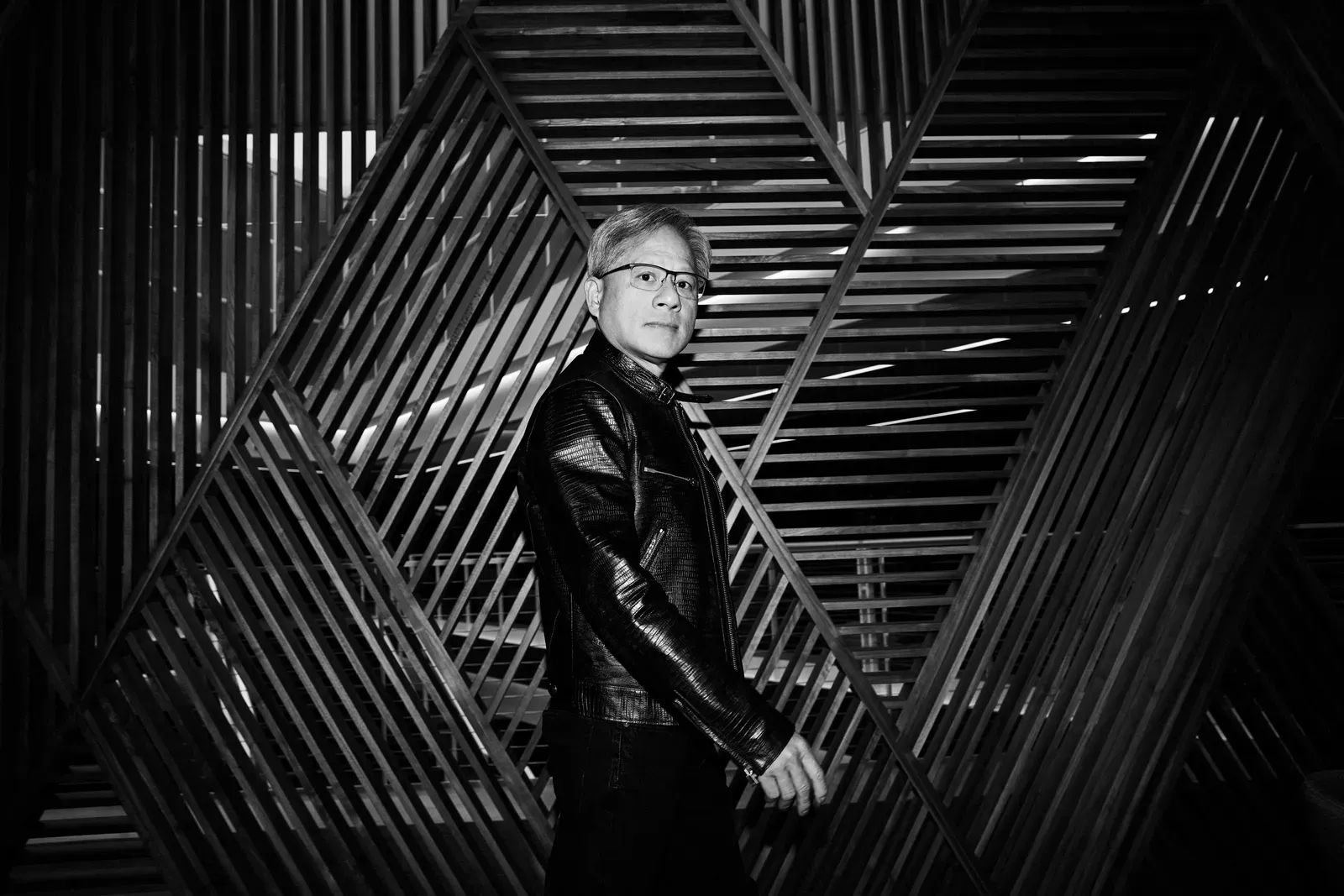
On Monday, 09.11.2026, WIRED exclusively reported that Huang had begun working with a crisis public relations firm in 2025 to manage his personal communications, and that starting in October 2025 those consultants began to be looped in to all press inquiries involving him, whether personal or professional in nature.
That timing lines up with a New York Times report from the same month that the US Commerce Department was investigating whether Alice's Megaspeed was helping Chinese companies get around American export controls with the help of a vast web of subsidiaries. The investigation was reportedly halted and transferred to the Justice Department after Nvidia general counsel Tim Teter inquired about it.
Huang has been a vocal critic of those export controls, which he argues unnecessarily constrain the market for American chips, create discrete Chinese and American tech ecosystems, and spur China to build competitive chips of its own. He has worked to develop a relationship with Trump in order to advocate for policies advantageous to Nvidia, including the idea of opening its markets to China.
Huang cofounded Nvidia in 1993 with friends Chris Malachowsky and Curtis Priem. The trio reportedly brainstormed their vision for the company in a Denny's diner, aspiring to bring realistic 3D graphics to personal computers. For the first few decades of its existence, Nvidia was primarily known in the gaming community for creating chips powerful enough to render high-quality in-game graphics.
In 2012, after a new kind of neural network known as AlexNet won a high-profile prize in computer vision, Nvidia pivoted from high-speed computer graphics to building chips that would support artificial intelligence. Huang has repeatedly described the introduction of AlexNet, developed by AI engineers Alex Krizhevsky, Ilya Sutskever, and Geoffrey Hinton, as a "Big Bang"-like event for computing.
Because its new GPUs proved highly effective at powering AI models that require massive amounts of processing power, the value of Nvidia shares soared in 2023 and 2024, in lockstep with the broader AI boom that swept through the world economy. In the summer of 2025, Nvidia became the first company in history to cross $4 trillion in value. As of September 2026, the company controlled about 90 percent of the GPU market.
Much of Nvidia's rise over the past few decades has been attributed not only to its cutting-edge chips and CUDA, the software "moat" that keeps developers locked into them, but also to the fast-thinking, controlling, charismatic, and often bombastic leadership style of Huang himself. Now, that critical ingredient of the company's success is out.